Early-stage startups often prioritize product development and customer acquisition, leaving brand building as an afterthought. However, establishing a strong brand foundation and community from the start can significantly impact your long-term success while still supporting immediate revenue goals. This guide provides actionable strategies for startup founders to build brand equity and communities that drive sustainable growth.
Understanding brand fundamentals for startups
Brand building for startups goes far beyond creating a logo or choosing colours. A strong brand encompasses your core identity, values, and the complete experience customers have when interacting with your company.
As a startup, your brand represents almost all aspects of your company: the understanding of your target demographic, alignment of your values with customer sensibilities, your company culture, especially during scaling, a defined visual identity and consistent tone of voice, how you disseminate your brand across channels, as well as serving as a foundation that can scale with your growth.
How brand importance evolves through startup stages
The focus and importance of branding shift dramatically as your startup progresses:
- Pre-seed stage: While branding may seem like a “nice-to-have,” defining core values and mission now lays the foundation for future growth. Start documenting these elements even if your full brand identity isn’t finalized.
- Product-market fit (PMF) stage: As you begin finding PMF, branding becomes significantly more important. This is when you should sharpen your unique value proposition (UVP) and develop consistent positioning that differentiates your offering.
- Go-to-market (GTM) and Series A: Branding becomes a critical strategic asset that directly impacts market penetration, customer acquisition costs, and investor perceptions. A well-developed brand at this stage can significantly accelerate growth.
How early-stage startups can develop a brand?
Step 1: Define your core identity
Start by establishing your fundamental brand elements, first off, your core mission and values. You should document why your startup exists beyond making money. What problem are you solving? What values guide your decisions?
You should also define your target audience by creating detailed buyer personas that describe demographics, interests, pain points, and communication preferences for your ideal customers.
It’s also useful to create a competitor analysis, identifying direct and indirect competitors. How will your brand stand out? What positioning will differentiate you?
Lastly, to define your startup’s identity, you need to create a value proposition. Craft a clear statement articulating why customers should chose you over alternatives
You can also find a useful, more detailed guide on the STP methodology here, which you can use to be more effective in your branding.
Actionable tip: Conduct 10-15 customer interviews to validate your core identity assumptions. Ask what attracted them to your solution and what values they associate with your offering.
Step 2: Create your brand narrative
Your brand narrative binds all elements of your identity together and fosters emotional connections with your audience:
- Origin story: Document how and why your startup began. What inspired the founders? What problem did you set out to solve?
- Brand voice and tone: Define how your brand communicates. Are you conversational or formal? Humorous or serious? Technical or accessible?
- Key messaging framework: Develop primary and secondary messages that will appear consistently across all communications.
Actionable tip: Create a one-page brand narrative document that team members can reference when creating content or speaking with customers to ensure consistency.
Step 3: Develop your visual identity
While visuals aren’t everything, they’re crucial for recognition. A simple, memorable logo design that works across different sizes and applications is the first step in the right direction.
It’s also important to choose a colour palette of 2-3 primary and 2-3 secondary colours that can reflect your brand personality. Typography is also crucial, choosing fonts for headings and body text that align with your brand character.
Combining this with other visual elements with a consistent style for things like images and icons ties your visual identity together and makes it seem as professional as possible.
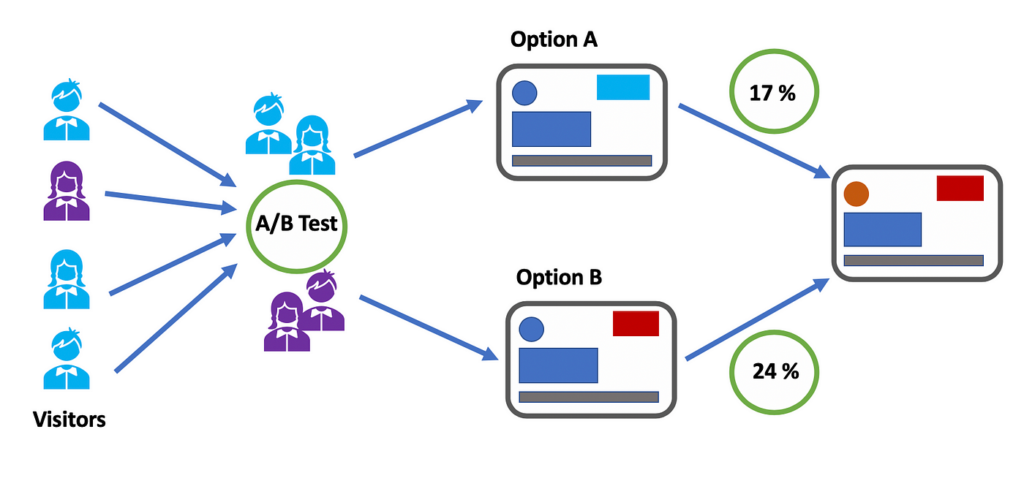
Actionable tip: Before investing heavily in design, test your visual concepts with target customers through simple A/B tests to see which resonates most effectively.
Step 4: Put your brand into the world
Now that you have developed a brand for your startup, you must implement it consistently across several touchpoints:
- Website: Ensure your website fully embodies your brand identity.
- Social media: Create profiles that maintain consistent branding across platforms.
- Marketing materials: Develop templates for common marketing assets.
- Product experience: Align your product interface with your brand identity.
Actionable tip: Create a simple brand style guide that everyone can reference, including logo usage rules, colour codes, typography guidelines, and tone-of-voice examples.
Building a thriving brand community
Communities transform transactional relationships into meaningful connections that drive loyalty, advocacy, and growth. So why does that matter, especially for early-stage startups?
According to research by Vanilla Forums, 58% of brands say their communities improve customer loyalty. For startups specifically, communities can provide valuable product feedback during early development stages, word-of-mouth (WOM) marketing from early adopters, reduced customer acquisition costs (CAC) through referrals, and a competitive advantage that’s quite difficult for competitors to replicate.
Let’s look at how to start building a community with your startup.
Step-by-step community building for startups
Step 1: Define your community’s purpose
Before trying to launch a community, as the founder of both your startup and the soon-to-be community, you must articulate what brings members together beyond just your product, be it the industry or area of work your product or service is used in, the problem to which you have the solution to, or anything else that can connect people.
You also have to outline the value members will receive from participating in your community and how this community aligns with your brand and its values.
Actionable tip: You could write a short community mission statement that clearly explains the purpose and benefits of joining your community. Use this in all community invitations.
Step 2: Choose the right platforms
Selecting the right platforms is a crucial step to establishing your community, and you must base it off the target audience – not just necessarily your startup’s target audience, but this developing community’s too, which can even be a broader group of people.
You also have to outline the value members will receive from participating in your community and how this community aligns with your brand and its values.
- Facebook groups: Excellent for general consumer communities with broad appeal
- Discord: Great for real-time interaction, especially with younger or tech-savvy audiences
- Slack: Ideal for professional or B2B communities
- Reddit: Works well for topic-focused discussions
- Dedicated forums: Provides more control and customization
Actionable tip: For the first time, it’s usually better to start with just one platform where your core audience is most active rather than spreading efforts across multiple channels.
Step 3: Create engaging content and foster participation
Once you have defined the core purpose of your community and selected the platform or platforms to foster it on, you must develop a content strategy that encourages engagement.
Some of the best ways to create engagement can be discussion prompts and questions encouraging members to share their own experiences. Posts with educational or behind-the-scenes content can also make people share their own insights and react positively to your content.
User spotlights – highlighting community members and their stories – as well as feedback sessions can create opportunities for people in your community to feel impactful and seen.
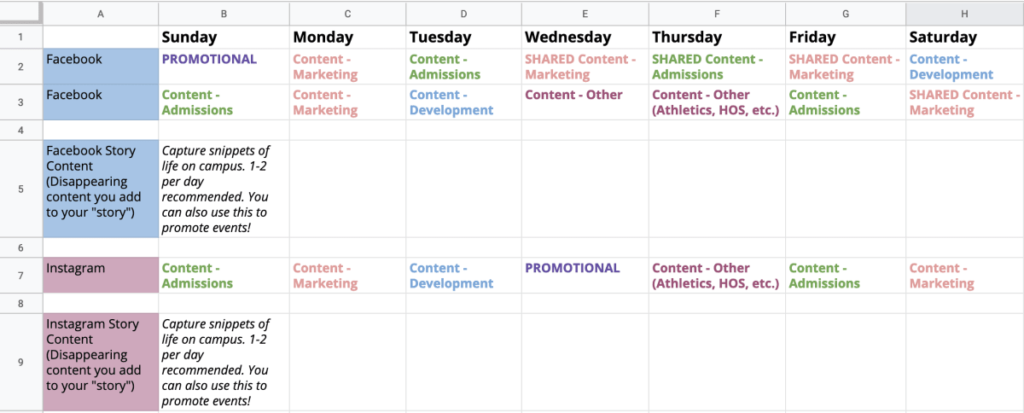
Actionable tip: Schedule content in advance using a content calendar, ensuring a mix of content types with at least 3-4 posts per week.
Step 4: Encourage user-generated content (UGC)
To build authenticity and amplify your community’s reach even further, user-generated content is a great option. Some of the ways you can boost UGC are by creating branded hashtags for members to use when sharing content, running contests with your product or service that encourage sharing, featuring members’ content on your official channels, and providing templates or prompts to make content creation easier.
Actionable tip: Launching a simple UGC campaign by creating a hashtag and offering to feature the best weekly submissions on your main social channels is a great way to “get the ball rolling”.
Step 5: Measure community success
Once your community starts to grow, you must track all sorts of metrics that indicate your community’s health, see what actions you can take to even further increase your reach, and perform even better. Some of the most important indicators to look for are:
- Growth: new member sign-ups, retention rates
- Engagement: active participation percentage, number of posts/comments
- Sentiment: positive vs. negative interactions
- Business impact: referrals, conversion rates from community members, retention differences
Actionable tip: Try to set up a simple dashboard tracking 3-5 key community metrics and review it monthly to identify trends and opportunities.
Balancing short-term revenue with long-term brand equity
The classic challenge for startups is meeting immediate revenue needs while building long-term brand value. Both are essential for sustainable growth. There is value to each approach and the first step is understanding it both.
Short-term revenue focus:
- Generates essential cash flow for operations
- Provides immediate data for optimization
- Proves product-market fit to investors
- Funds ongoing development and growth
Long-term brand equity focus:
- Creates trust and recognition in the market
- Enables premium pricing as you grow
- Reduces customer acquisition costs over time
- Attracts talent, partners, and investors
- Provides resilience during market fluctuations
Strategies for achieving both simultaneously
There are some strategies you can implement to achieve both short-term revenue while building long-term brand value as well.
While the thought of integrating brand elements even into performance-focused ad campaigns can seem obvious, it’s still important to point out that using consistent messaging themes across both brand- and conversion-focused content and including brand storytelling elements makes a large impact on your long-term brand value.
Strategical budget allocation can also be of key importance, in the beginning starting with a 70/20 split favouring performance marketing and gradually shifting toward more brand investment as your revenue stabilizes. You should still reserve at least 20% of your marketing budget for pure brand-building activities regardless of stage.
In order to further inform your brand strategy, use performance data. Analyse which brand messages perform best, identify the most responsive customer segments, and refine your brand positioning based on actual customer behaviour.
Lastly, creating hybrid campaigns can be a great tool for achieving long- and short-term success, simply by developing campaigns with both brand building and conversion objectives, including brand metrics alongside KPIs when measuring campaign success.
Actionable tip: When designing a new marketing campaign, define both a performance metric (e.g., CAC conversion rate) and a brand metric (e.g., awareness, sentiment) to track success across both dimensions.
Startup brand building as a competitive advantage
For early-stage startups, intentional brand building is a strategic imperative that drives both short- and long-term success. By establishing a clear brand identity, fostering a community of advocates, and balancing immediate revenue needs with long-term equity building, startups can create a sustainable competitive advantage.
It’s important to start the process of both brand and community building from day one, evolving it alongside product development rather than following it. While resources may be limited, the strategic allocation of time and effort toward building these foundational elements will compound over time, resulting in lower customer acquisition costs, higher retention rates, and the ability to command premium pricing as you scale.
Remember that brand building is an iterative process that requires consistency, authenticity, and constant refinement based on customer feedback and market response. Start with the foundational elements outlined in this guide, measure your progress, and continuously optimize your approach as you grow.
Your brand is ultimately the story that people tell about your company when you’re not in the room. By taking control of that narrative from the beginning, you set your startup on a path toward sustainable growth and long-term success.
Maintaining consistency can be challenging as your startup grows and more channels open up. Our CMO Partner service helps you keep your brand voice unified and professional across every platform, so your message stays clear while you focus on building your business.